.svg)

Beauty Is Nature’s Marketing Secret, Regenerative Organisations Should Pay Attention


Author: Moh Al-Haifi
Co-Author: Isabelle Drury, Daniela Elster Rifo
Contributors: Lee Fitzpatrick, Zac Schaap
You’re sitting in a conference room listening to a presentation that should change everything.
The speaker understands systems thinking better than anyone you’ve met. Their methodology could genuinely transform how organisations operate. The research is impeccable, the framework transformative, the potential impact profound.
But fifteen minutes in, you’re fighting to stay awake. The slides are dense with text, the colour palette screams “corporate consulting,” and somehow this world-changing work feels… disconnected. All the substance is there, but something essential is missing.
Sound familiar? Perhaps because you’ve been that speaker yourself.
We’ve witnessed this pattern repeatedly across impact-driven and regenerative consultancies. These organisations possess transformative methodology and deep systems expertise, yet there’s often a disconnect between the vibrancy of their work and how it’s presented to the world.
Somehow, the importance of beauty has slipped through the cracks.
Perhaps it’s because these brilliant minds are so focused on solving complex problems that aesthetic considerations feel trivial. Or maybe it’s a reaction against consultants who prioritise style over substance. Having witnessed this hollow approach, regenerative leaders often swing to the opposite extreme entirely.
Whatever it is, the consequences are real. As the polycrisis intensifies, it becomes harder to build the deep, trusted relationships this work requires. This can affect deal-flow, erode trust, and make it harder for vital messages to find their audience.
The typical response is understandable but often ineffective, an exhausting cycle of more tactics and campaigns, or reverting to familiar approaches like unstrategic social media posting and hoping conditions will improve.
But the deeper connection remains elusive.
Why Regenerative Leaders Struggle with Beauty
Many regenerative leaders experience what we call “beauty blindness”: the tendency to overlook aesthetic choices as strategic decisions that shape how their work is received.
This often stems from understandable conditioning. Academic and consulting cultures tend to separate “serious” content from visual presentation. There’s concern about being perceived as caring more about style than substance. A worldview that sees beauty as decoration rather than function.
There’s also a practical reality. Thoughtful design requires time and resources when budgets are tight and the work itself feels urgent. It can feel justified to prioritise substance over presentation.
Yet this approach may overlook beauty’s communicative power. In nature, beauty serves as a primary communication tool, the bridge between what exists and what gets noticed.
We’re calling for radically authentic expression that honours both substance and beauty, because beauty IS substance when you’re trying to change hearts and minds. Beauty is alchemy.
And alchemy is essential when you’re trying to transform the world.
Dani, who works with purpose-driven organisations across different continents, has witnessed this disconnect firsthand. In her experience, beauty isn’t something superficial, it carries meaning. ‘Beauty speaks the language of life: it evokes emotion, creates resonance, and helps people feel rather than just understand,’ she explains. ‘When a project’s visual and sensory language emerges from its inner purpose, from its essence and living context, it doesn’t just look good; it feels true.
How Nature Teaches Us to Communicate
Step into any healthy ecosystem and you’ll witness the universe’s most sophisticated communication system at work. Nature doesn’t just function, it dazzles.
The Fibonacci spiral appears across species and scales, from sunflower seed arrangements to shell formations, patterns that evolved for optimal space utilization and growth, yet happen to create visual harmony.
Bird courtship rituals showcase full-spectrum displays of colour, movement, and song.
Flower petals display evolved patterns, like symmetry, coloration, markings, and nectar guides, that trigger strong neurological responses in pollinators and humans alike.
Tree roots and their fungal partners form ‘wood‑wide web’ networks, transmitting chemical signals, such as warning cues from insect attacks, across plants in ways that have inspired biomimicry and ecological design
Beauty functions as a sophisticated biological communication system. Stephen Porges’s Polyvagal Theory reveals that “our nervous system is always trying to figure out a way for us to survive, meaning to be safe” by constantly scanning for environmental cues. As Porges explains, “Cues of safety are the treatment,” because “safety is defined by feeling safe and not simply by the removal of threat.” When we encounter beauty in nature, or in thoughtfully designed brand experiences, our nervous system receives signals that it’s safe to be open, creative, and connected.
This is why regenerative organisations struggling with lifeless branding are fighting their own biology. When your visual presence feels corporate and sterile, you’re inadvertently triggering what Porges calls “neuroception”, our unconscious scanning for threat, rather than the safety signals your mission requires.
Learning from nature’s approach to beauty opens up abundant possibilities. True regenerative branding can draw from bioregional awareness, the patterns that emerge naturally in your local ecosystem. It can honour ancestral wisdom, the design traditions from your lineage that want to be remembered. It can practice cultural reciprocity, learning from nature and indigenous wisdom with deep respect, always ensuring you’re not extracting or appropriating but genuinely collaborating and giving back.
Most importantly, it seeks genuine expression rooted in relationship. How does your unique story want to be told through visual language that honours all the life and wisdom that supports your work?
This approach requires moving beyond the colonial tendency to take beautiful elements from other cultures as aesthetic inspiration, and instead asks: how can we learn respectfully while staying authentic to our own place and story?
We’re talking about discovering the beautiful elements that are already yours to express, rooted in your place and your purpose.
Why Beautiful Branding Actually Works
Mindful philosophy speaks of the gap between stimulus and response, that sacred space where choice lives. In our hyper-stimulated world, these moments of pause offer us the opportunity to respond from intention rather than reaction, to connect with what truly matters, and to make choices aligned with our deepest values.
Beautiful branding breaks patterns. It makes people stop scrolling, stop thinking, stop operating from habitual responses.
Consider the moment you lock eyes with someone and time stops. Standing before a mountain vista that renders you speechless. Watching a murmuration of starlings and forgetting to breathe.
These experiences share a common thread: beauty that breaks through our unconscious patterns and creates presence.
Researchers have identified what they call “the aesthetic triad”, demonstrating that “aesthetic experiences are emergent mental states arising from interactions between three neural systems: sensory-motor, emotion-valuation, and knowledge-meaning.”
Most significantly for organisations trying to create change, beauty activates the same brain systems as other rewards. As research shows, “the judgment of a painting as beautiful or not correlates with specific brain structures, principally the orbitofrontal cortex, known to be engaged during the perception of rewarding stimuli.”
Additionally, when we encounter aesthetic experiences, “the reward system releases feel-good brain chemicals like dopamine, serotonin, and oxytocin that trigger sensations of pleasure and positive emotions. We see these pleasure centers light up in the brain when we are both creating and beholding the arts or engaged in aesthetic experiences.”
For regenerative organisations, this research suggests that beautiful design isn’t just aesthetic preference, it may actually support the kind of engagement your mission requires. When people encounter genuinely resonant visuals, their brains respond similarly to other rewarding experiences, potentially creating more openness to new ideas.
This matters because if you’re inviting people to imagine different ways of being, the visual experience becomes part of that invitation. There’s something profound about organisations whose presentation feels as alive as their vision.
We’ve noticed that when there’s a disconnect between mission and visual presence, people sense it intuitively. It’s not that every regenerative organisation needs to look the same, but rather that each needs to find visual expression that feels authentic to what they’re creating.
What Happens When You Get It Right
There’s a transformation that occurs when regenerative organisations finally embrace beauty as strategy, though the specific metrics vary wildly depending on the context and approach.
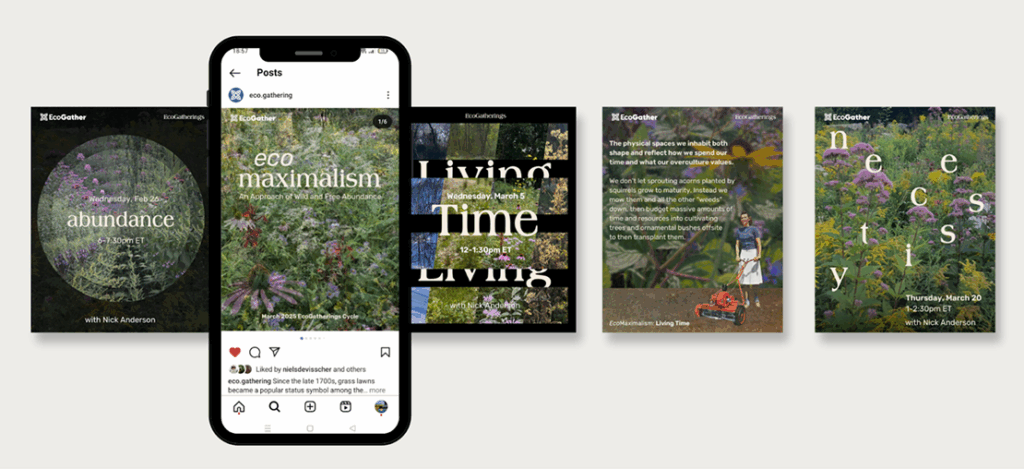
EcoGather, a co-sensing and learning community that offers courses and recurring gatherings to find like-spirited people who treat the exhausted earth with reverence, partnered with Sympoiesis to refresh their brand. EcoGather saw significant growth in followership and engagement after their brand refresh–visually, the feed has heightened coherence and a unique appeal.
But the deeper impact was relational. As Nicole Civita, their Network Weaver, describes: “Sympoiesis offers the rare gift of attunement. Every time we begin a new phase of our collaboration, I sense each player picking up and calibrating their instruments, warming up, and improvising new harmonies. New melodies bend and bounce between us. Before long, ideas are singing, images are dancing, and our offerings are reverberating more widely and deeply than before.”
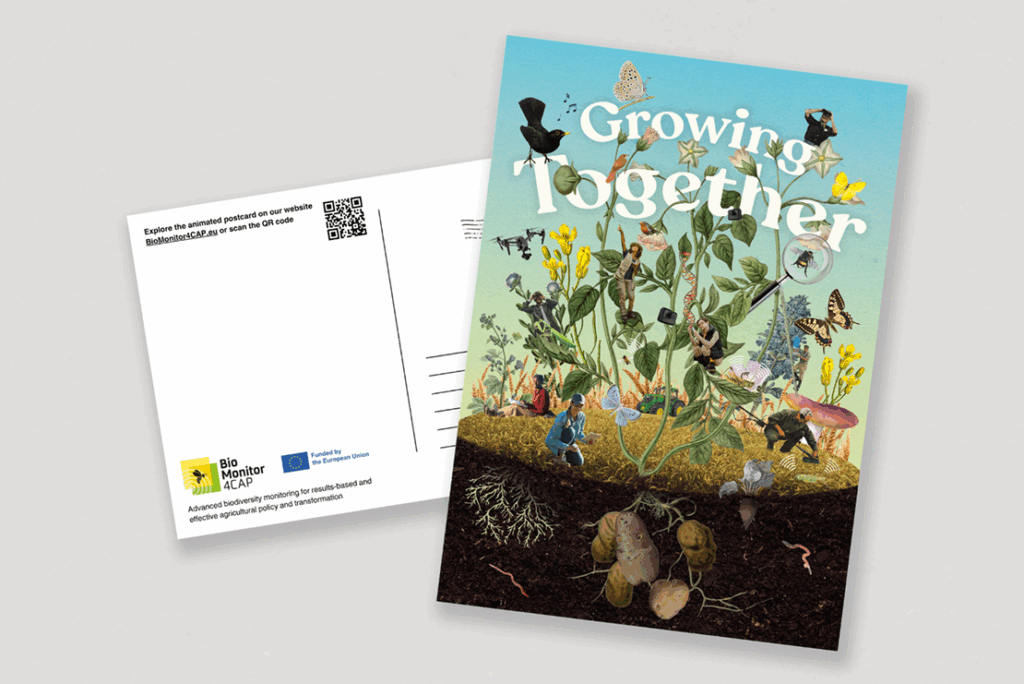
The BioMonitor4CAP project involves 23 partners across 10 European countries working on biodiversity monitoring in agricultural landscapes. Rather than producing another dry, text-heavy flyer, they collaborated with Sympoiesis to create a vibrant and lively collage postcard and animated video loop under the theme of “Growing Together”, highlighting the collaboration between international project partners; between the scientists, farmers, and general public; and between humans and the more-than-human world.
We’ve witnessed this transformation firsthand with our own clients. Fairnergy is a start-up that exists to connect fair energy initiatives with funding they rightfully deserve. Fairnergy works with good partners doing great things, and together they connect the wealth of the global North with the renewable energy needs of the global South. They approached us to help develop a lean and experiment lead growth marketing strategy. In the process however, they discovered that they first needed a brand identity that reflected the connection between technology and nature, amplifying the individual impact of socially conscious e-mobilists.
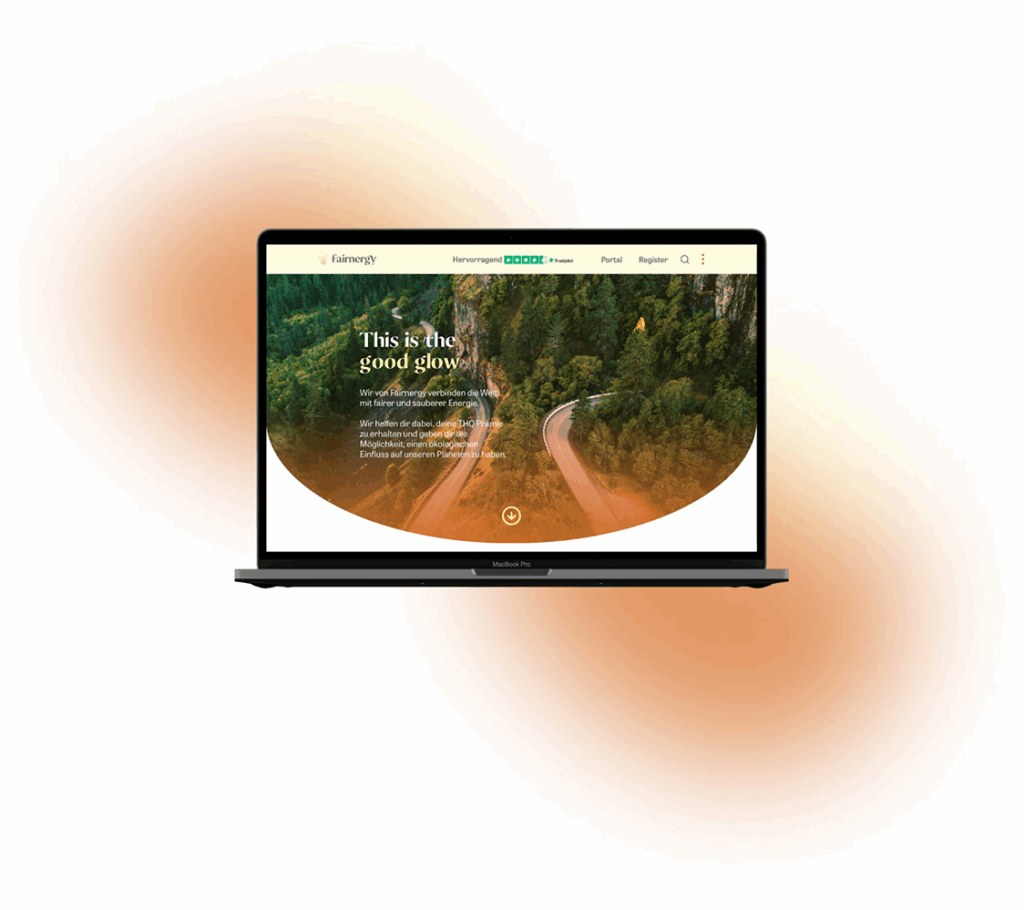
Together we highlighted the defiant optimism in their search for realistic solutions to seemingly impossible problems. We worked collaboratively with key stakeholders to develop a brand strategy, visual identity and visual language, as well as website design, whilst simultaneously building out an experiment lead and data-driven growth strategy.
The Broader Impact of Aesthetic Transformation
When regenerative organisations prioritise beauty, something magical happens that goes far beyond improved marketing metrics.
When your brand feels beautiful, teams feel it too. Team meetings transform. The energy shifts from survival mode to celebration mode. People feel genuinely proud to share their work rather than apologetic about their “marketing materials.” There’s a palpable sense of alignment. Finally, how they present themselves matches the beauty of what they’re trying to create in the world.
The transformation can extend beyond individual organisations. The African philosophy of Ubuntu teaches us that beauty operates as a relational force in community. As Desmond Tutu explains, “A person with ubuntu is open and available to others, affirming of others, does not feel threatened that others are able and good” because Ubuntu recognises that “I am because we are.”
James Ogude, a Kenyan literary scholar, describes how Ubuntu “imposes a sense of moral obligation regarding your responsibility for others even before you think of yourself” and creates relationships where “there’s empathy, there’s trust, that is built in this process.”
When regenerative organisations embrace beauty authentically, they tap into what Ubuntu philosophy recognises as collective dignity. Their transformation creates ripple effects that affirm the beauty and capability of others in their ecosystem, partners, competitors, and entire movements begin to elevate their own aesthetic standards.
When people can feel the aliveness in your brand, they connect to the truth of what you’re trying to say, your essence and your purpose. They sense the depth behind the beauty and understand they’re engaging with transformation, not just consultation. This authentic connection naturally leads to deeper investment in the work.
The ripple effect touches everything. Board members feel more confident presenting to stakeholders. Staff retention improves because people want to be associated with work that looks as meaningful as it feels. Even small interactions become moments of inspiration rather than missed opportunities.
Starting Your Own Transformation
The path to regenerative beauty doesn’t require massive budgets or complete rebrands. It begins with honest reflection about where you are and what wants to emerge.
What if you paused and really looked at every touchpoint where people encounter your work? Your website, certainly, but also your presentations, your social media, your email templates, your Zoom backgrounds, your business cards. Does this collection of touchpoints feel alive or dead? Would you stop scrolling for this? Does this honour the magnitude of your mission?
What colours appear in your bioregion across the seasons? What patterns emerge in local flora and fauna? How might these natural rhythms inform your visual rhythm? There’s something profound about brands that feel rooted in place, that carry the essence of where the work is happening.
And what about your lineage? What design traditions from your ancestral cultures want to be remembered through your work? How can you weave these threads authentically without appropriation? Your authentic visual language is already within you and waiting to be discovered.
That voice saying “this website feels too corporate” or “these stock photos feel lifeless”, what if you actually listened to it? Your aesthetic intuition is more sophisticated than most marketing advice. You know when something feels aligned and when it doesn’t. The question is whether you’re brave enough to trust that knowing.
Questions for Reflection
The shift from aesthetic blindness to beauty consciousness happens through inquiry. Consider these questions not as exercises, but as invitations to see your work with new eyes.
- When people encounter your brand, do they feel more alive or more drained? If your organisation were a healthy ecosystem, what would be its signature beauty? How might embracing visual excellence shift the energy of your team meetings?
- What patterns from your bioregion are calling to be expressed through your visual identity? What stories from your lineage want to be honoured in your brand expression? Where in your current communications are you hiding your light?
- If your organisation were a bird species, how would it dance to attract its ideal mates? What would happen if you stopped apologising for caring about how things look? How would your mission be served by presenting yourself as beautifully as the future you’re creating?
Beauty as Responsibility
The world needs regenerative solutions that feel as alive as the future they’re creating. When we divorce substance from beauty, we rob our movement of its magnetic power.
Every sterile website, every lifeless logo, every corporate-feeling brand in the regenerative space sends an unconscious message: “We can regenerate the planet, but somehow we can’t regenerate our own presentation.”
What if instead, every interaction with your brand left people feeling more energised and hopeful about the future you’re creating together? What if your visual presence became as compelling as your mission? What if beauty became your secret weapon for changing the world?
The regenerative future we’re building needs advocates who look the part, not because appearance matters more than substance, but because in nature, beauty and function are inseparable.
The transformation begins with a single decision: to honour both the depth of your work and the beauty of its expression. Everything else flows from there.
Working Together on This Journey
If these reflections are stirring something in you, know that you don’t have to navigate this transformation alone.
We’ve developed approaches that honour both the urgency of your mission and the patience required for authentic beauty to emerge. Whether it’s discovering your visual language through intensive brand development, transforming your digital presence to match your values, clarifying your unique position in the regenerative space, or weaving beauty into all your ongoing communications, the path forward is both practical and profound.
The work begins with seeing beauty not as luxury but as responsibility. Your mission deserves a brand as alive as your vision.
Join Us In This Mission
These examples represent just a fraction of the beautiful work happening across the regenerative space. We’re continually inspired by organisations that understand beauty as strategy, not decoration.
Have you witnessed or been part of regenerative branding that took your breath away? We’d love to learn about projects where visual excellence and regenerative values came together powerfully. Whether you’re a designer, consultant, or organisation leader who’s experienced this transformation, we want to hear from you.
Get in touch with Lee Fitzpatrick via email (lee@zebragrowth.com) if you have examples you’d like to share with us to help us build a more comprehensive picture of what’s possible when regenerative organisations embrace their full aesthetic potential.
You can also view Zebra Growths core storytelling services if you’d like to explore ways we support regenerative organisations with branding and content.